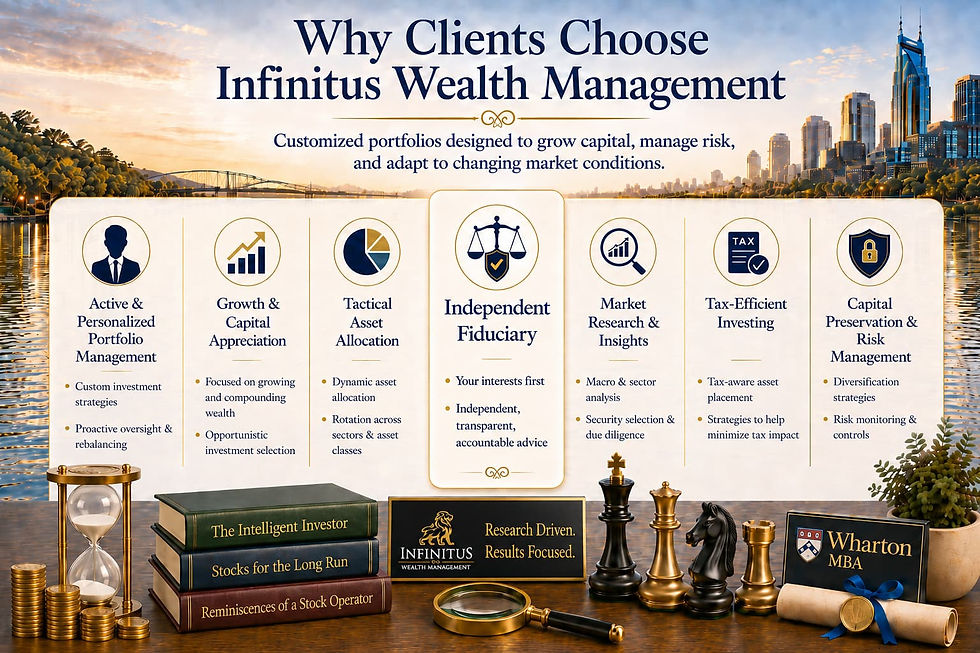
Why Athletes Need a Fiduciary — Not an Agent — Managing Their Money


Erik James Roberts — Founder & CIO, Infinitus Wealth Management. Purple Heart recipient, Wharton MBA.
Updated September 2, 2026
Athletes need a fiduciary managing their money for one structural reason: the person investing your earnings should be legally required to put your interests first — and paid in a way that makes doing so natural. Your agent already fills a vital seat on your team; negotiating the contract and building your brand is demanding, specialized work. Managing what those deals produce is a different job, governed by a different legal standard, and it deserves its own professional. This article walks through both roles, the standard that separates them, and how to build a money team where everyone plays their position.
Your Agent Earned Their Seat — at the Job Agents Are Built For
A good agent is one of the best investments of an athlete's career. Agents are certified and regulated by the players associations, and their compensation is capped by the same bodies: an NFLPA-certified agent can charge no more than 3% of a negotiated contract, and the NBPA caps agent fees at 4%. Endorsement work sits outside those caps — commissions there typically run 10% to 20% — because marketing deals are the open market, and closing them is exactly what a great agent is wired to do.
Notice what that engine is built around: deals. An agent's training, network, and paycheck all point toward negotiating and closing — which is precisely what you hired them for. Stewarding money for forty years after the deals close runs on a different engine entirely: research, tax discipline, patience, and a legal duty that has nothing to do with commissions. Wanting both jobs done well is not a knock on either professional. It is the reason they are two seats.

What the Fiduciary Standard Means for Your Money
A fiduciary investment adviser is regulated under the Investment Advisers Act of 1940 and owes clients a legal duty to act in their best interest — not sometimes, not when convenient, but as the baseline of the relationship. That is a categorically different obligation than a sales standard, where a recommendation merely needs to be suitable, and different again from the many financial relationships that carry no legal duty at all beyond the handshake.
The standard matters most when you pair it with how the adviser is paid. A fee-only fiduciary earns one transparent advisory fee and nothing else — no commissions, no product placements, no revenue sharing, no cut of anything you buy. When the advice itself is the entire business, the incentive to recommend anything other than what serves you simply is not in the building. Every registered adviser also files a public Form ADV describing exactly how they operate and how they are paid — a document you can read before you ever shake hands.

The Conflict Nobody Designs on Purpose
Most of the money trouble athletes encounter does not come from bad people. It comes from good relationships asked to do jobs they were never structured for: the representative who also "handles the investments," the friend-of-a-friend with an opportunity, the adviser chosen because they were already in the building rather than because anyone examined their standard, their process, or their pay. When one hand touches everything, nobody is positioned to check the work — and the athlete, busy with an actual career, becomes the only oversight in the room.
Separation fixes this quietly and protects everyone — including the agent relationship you value. When the fiduciary manages the portfolio, the CPA checks the tax work, the attorney reads the contracts, and the agent negotiates the deals, each professional's work passes through another's review. Structure does what vigilance alone cannot.
Build the Huddle: Four Seats, Four Lanes
The complete money team for a professional athlete has four seats. Your agent handles representation — contracts, endorsements, career strategy. Your fiduciary adviser builds and manages the portfolio and coordinates the overall financial plan. Your CPA owns the filings, the quarterly estimates, and the multi-state "jock tax" puzzle that comes with earning income in every city you play in. Your attorney reads what you sign and protects what you build. If you have some of these seats filled and not others, that is normal — and it is part of our job to help: Infinitus works alongside your agent, never instead of them, and can introduce vetted CPAs and attorneys when you need those seats filled.

A Short Window, a Long Horizon: What the Fiduciary Actually Builds
The reason athletes need a fiduciary more than almost any other client is the shape of the career itself: peak earnings arrive early, arrive fast, and stop while most of life is still ahead. The money earned in a compressed window has to work for decades — which is a portfolio construction problem, and it is exactly the work a fiduciary adviser exists to do. At Infinitus, that means a custom portfolio of individual stocks and bonds built around your contract timeline, your signing bonus, your income gaps between deals, and the life you are building after the game — never an off-the-shelf model, never a pooled product with someone else's priorities inside it.
The economics stay as transparent as the standard: one published advisory fee — 1.00%, stepping down to 0.95%, 0.90%, and 0.80% as assets grow — covering the portfolio and a complete financial plan for every investment management client, with no separate planning charge. Compare that with the layered arrangements athletes are often sold, and the appeal of one visible number, from a fiduciary with no products to move, tends to speak for itself.

Six Questions to Ask Anyone Who Wants to Manage Your Money
Are you a fiduciary one hundred percent of the time — and will you put that in writing?
How exactly are you paid — and does anyone else pay you anything for what you recommend?
Where will my money be held? (The answer should be an independent custodian in your name — never the adviser's own firm.)
Can I see your Form ADV before we go further?
What will I actually own — and can you explain why each position is there?
Who on my team will check your work — and are you comfortable with that?
A professional worth hiring will welcome every one of these. The conversation they start is the beginning of the relationship you actually want.
Frequently Asked Questions
What is a fiduciary financial advisor for athletes?
A registered investment adviser, legally bound under the Investment Advisers Act to act in the athlete's best interest, who manages the money a playing career produces — the portfolio, the plan, and the coordination with the CPA and attorney. The fiduciary works alongside the agent; the two roles cover different ground under different rules.
Can my agent also manage my investments?
Agents are certified by players associations for representation — that certification does not make someone an investment adviser, and managing money is not what it tests for. Some individuals hold both roles, and the questions to ask are the same ones you would ask anyone: what legal standard governs the investment advice, and who pays you for it. Keeping the seats separate is the structure that lets each professional be checked by another.
How is a fiduciary advisor paid?
A fee-only fiduciary is paid one transparent advisory fee by the client and nothing by anyone else — no commissions, no product revenue. At Infinitus the published schedule is 1.00%, stepping down to 0.95%, 0.90%, and 0.80% as assets grow, and it covers both the portfolio and a complete financial plan for investment management clients.
When should an athlete hire a fiduciary advisor?
Before the first significant check clears — the draft, the first contract, the first major endorsement or NIL deal. The earliest dollars have the longest time to work, and the habits set in year one tend to become the structure of the whole career. It is never too late to add the seat; it is simply most valuable early.
Does working with Infinitus replace my agent?
No — and it shouldn't. Your agent negotiates and represents; we manage what the deals produce. The best outcomes happen when both seats are filled by professionals who respect the line between them. New relationships with us begin with an introductory conversation.

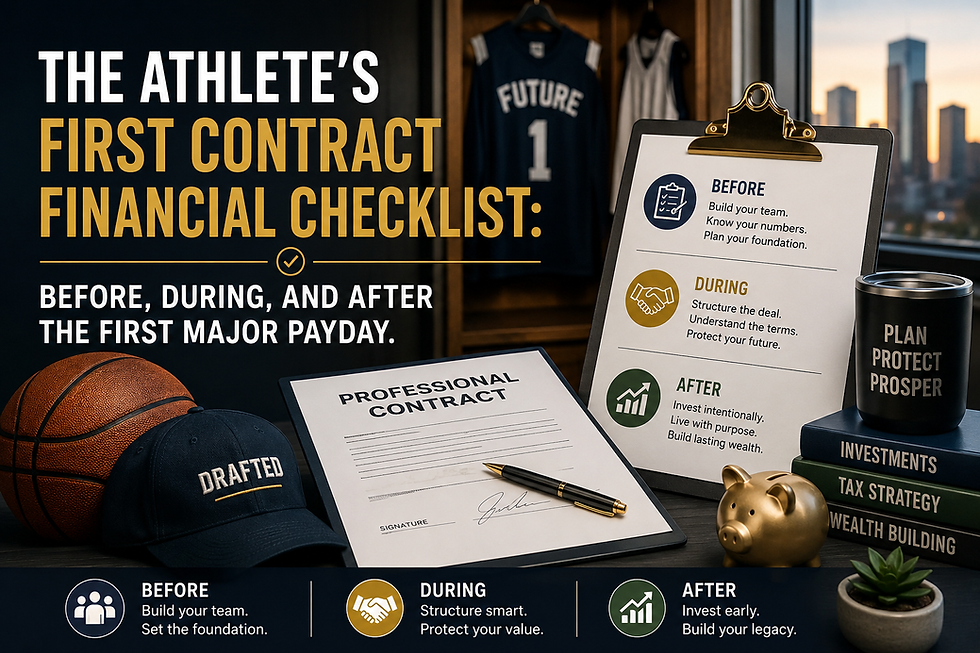
The Athlete's First Contract Financial Checklist: Before, During, and After the First Major Payday
NIL Money Mistakes to Avoid: The 7 Errors That Cost Athletes Their Windfall
Wirehouse vs Independent RIA Fees: What's the Real Difference?
Independent Fiduciary Advisor vs. Wirehouse Advisor: Which Is Right for You?
Disclosures: Infinitus Wealth Management is a fee-only, independent fiduciary registered investment adviser. This material is provided for informational and educational purposes only and does not constitute investment, legal, or tax advice, an offer to buy or sell any security, or a recommendation of any specific investment, strategy, or account type. Nothing here is legal advice regarding representation agreements; league and players-association rules vary and change — consult your certified agent and attorney on representation matters and your CPA on tax matters. Investing involves risk, including the possible loss of principal. Diversification does not guarantee a profit or protect against loss in a declining market. Any illustrations in this article are hypothetical, are not drawn from actual client accounts, and do not represent the performance of any Infinitus strategy or client. Past performance is not indicative of future results. Advisory fees are described in our Form ADV Part 2A, available upon request.