
Wealth Management Nashville: How to Choose the Right Investment-Focused Wealth Manager

Updated: Jun 11

Nashville's wealth landscape has transformed dramatically. As the city grows into a major financial center, the demand for true investment-focused wealth management in Nashville has never been higher — and the stakes of choosing the wrong manager have never been greater.
In this article
Why Nashville's Wealth Management Market Is Different
Investment Manager vs. Financial Planner: Know the Difference
The 7 Non-Negotiable Criteria for Choosing a Wealth Manager
The Fiduciary Standard: Why It's Non-Negotiable
Active Portfolio Management vs. Passive Investing
Evaluating Investment Strategy Depth
Tax-Efficient Wealth Management in Nashville
Questions Every Serious Investor Must Ask
Red Flags That Signal the Wrong Manager
Building a Long-Term Wealth Management Relationship
Why Nashville's Wealth Management Market Is Different
Nashville is no longer simply Music City. Over the past decade it has emerged as one of the fastest-growing wealth centers in the American South, drawing corporate headquarters, high-earning executives, successful entrepreneurs, musicians, athletes, and multi-generational family money from across the country. With that growth has come an explosion of financial advisory firms, wealth management boutiques, and investment platforms — all competing for a client base that is increasingly sophisticated and increasingly demanding.
That competition is a double-edged sword. On one hand, high-net-worth investors in Nashville now have access to a genuinely competitive market for wealth management services. On the other hand, the proliferation of firms makes it harder than ever to identify who is actually equipped to manage serious investment capital versus who is simply good at marketing themselves. Choosing the right investment-focused wealth manager in
Nashville is one of the most consequential financial decisions you will make — and it deserves a rigorous, informed approach.
This guide is written from the perspective of an investment professional who has spent years inside this market. It is direct, specific, and unapologetically demanding — because your capital deserves nothing less.

Investment Manager vs. Financial Planner: Know the Difference
The single most important distinction you can make when evaluating wealth management in Nashville is the difference between an investment manager and a financial planner. The industry often blurs this line, but the difference is profound and directly affects how your money is managed.
Financial Planners
A financial planner builds a comprehensive plan around your financial life — budgeting, insurance, estate planning, tax strategy, and retirement projections. This is valuable work, but it is advisory in nature. The planner tells you what to do; they are not necessarily the person actively managing the portfolio to make it happen. Many large wirehouses and regional banks call their advisors "wealth managers" when, in practice, their advisors are primarily planners who outsource the actual investment management to third-party model portfolios or firm-level strategies.
Investment-Focused Wealth Managers
A true investment-focused wealth manager is in the market daily. They construct portfolios from the ground up, make active allocation decisions, conduct original investment research, and take direct accountability for portfolio performance. They do not simply allocate your assets to a generic fund lineup — they build, monitor, and adapt your specific portfolio based on changing market conditions, your evolving financial situation, and disciplined investment thesis. This is a fundamentally different skill set, and when you are looking for wealth management in Nashville, this distinction should be the first filter you apply.
"The most expensive mistake in wealth management is not poor investment returns — it is paying investment management fees while receiving financial planning services."
The 7 Non-Negotiable Criteria for Choosing a Wealth Manager in Nashville
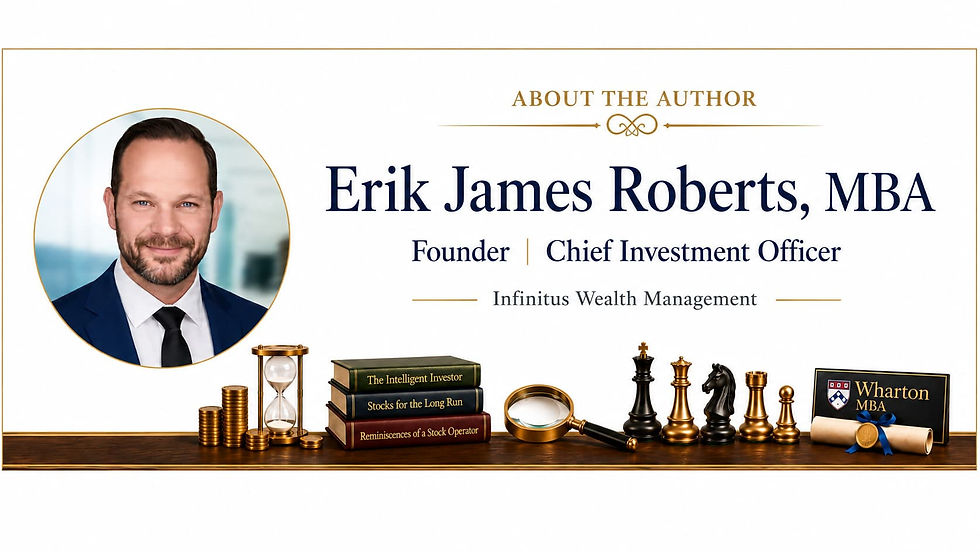
After years working at the highest levels of investment management, I have identified seven criteria that separate genuinely excellent wealth managers in Nashville from the vast majority of the field. Use these as your framework.
01
Fiduciary Status
Are they legally required to act in your best interest at all times — not just some of the time?
02
Investment Depth
Do they conduct original research and build custom portfolios, or rely on standardized models?
03
Strategy Breadth
Can they serve your needs across growth, income, preservation, and international exposures?
04
Independence
Are they independent, or do they face institutional pressure to sell proprietary products?
05
Tax Awareness
Is tax-efficient investing embedded into portfolio construction — not bolted on after the fact?
06
Customization
Is your portfolio built for your specific objectives and life stage — or a template with your name on it?
07
Accountability
Do they report transparently on performance and communicate proactively when markets move?
Any wealth manager you seriously consider for investment management in Nashville should pass every one of these tests. If they struggle to articulate their position on any of these criteria, that itself is your answer.
The Fiduciary Standard: Why It Is Non-Negotiable in Wealth Management
The term "fiduciary" has become something of a buzzword in financial services, but its legal and practical significance remains enormous. A registered investment advisor (RIA) operating as a fiduciary is legally obligated to act in the client's best interest at all times — in investment selection, in fee structure, and in every recommendation made. This is not the same as the "suitability" standard, which only requires that a recommendation be "suitable" for a client, not necessarily optimal.
In practical terms, the fiduciary standard means your wealth manager cannot recommend a higher-cost investment product simply because it generates a higher commission. It means conflicts of interest must be disclosed. It means your capital is managed in your interest, not the firm's. For anyone seeking serious investment-focused wealth management in Nashville, working with a fiduciary independent advisor is the baseline — not a bonus feature.
What to ask any prospective wealth manager
Ask directly: "Are you a fiduciary 100% of the time, on every recommendation you make?" If the answer includes any qualification — "most of the time," "in most circumstances," "when acting as an RIA" — that is a structural conflict of interest you should not accept.
Active Portfolio Management vs. Passive Investing: What Nashville Investors Need to Know
One of the most consequential debates in modern investment management is whether active management — selecting specific securities and making tactical allocation decisions — can consistently add value over passive index investing. It is a legitimate debate, and any experienced investment professional should be prepared to engage with it honestly.
Here is the honest answer: passive indexing works reasonably well in highly efficient large-cap U.S. equity markets over long time horizons. But it fails to adapt to market volatility. It fails to manage downside risk during drawdowns. It fails to optimize for individual tax situations. And it offers zero customization for investors with concentrated positions, ESG requirements, income needs, or capital preservation objectives.
The Case for Active, Disciplined Management
The strongest argument for active wealth management in Nashville — or anywhere — is not that it always beats a benchmark in every calendar year. The strongest argument is that disciplined active management can deliver superior risk-adjusted returns over a full market cycle while providing the customization, tax efficiency, and downside protection that generic indexing cannot. The goal is not to beat the S&P 500 every quarter. The goal is to grow and preserve your specific wealth in a manner aligned with your specific objectives.
This requires a manager who genuinely understands capital markets, maintains a coherent and documented investment philosophy, and is willing to make and defend active decisions — not one who simply mirrors an index and calls it portfolio management.
Evaluating Investment Strategy Depth in Nashville Wealth Managers
A wealth manager's ability to serve you over time depends entirely on the breadth and depth of their investment strategy capabilities. A firm that only manages U.S. large-cap equities is not equipped to serve you through a full market cycle. A firm that only offers a single risk profile is not genuinely customizing your portfolio. When evaluating investment-focused wealth management in Nashville, ask specifically about what strategies and asset classes the firm manages directly — not through third-party sub-advisors.
A sophisticated investment manager should be able to articulate a clear approach across equity strategies at multiple capitalization levels, fixed income including municipal bonds, international and global equity exposure, tactical asset allocation, growth and capital appreciation strategies, income-oriented and dividend strategies, and capital preservation approaches. The ability to move across these strategies based on market conditions and client objectives is what separates genuine portfolio management from simple asset allocation.
The Importance of Multiple Strategies
Nashville investors often come to wealth managers at pivotal life stages — a liquidity event from a business sale, an inheritance, a compensation package with concentrated stock exposure, or a transition into retirement. Each of these situations demands a different investment approach. A firm offering a single strategy or a rigid template cannot serve these varied needs well. The ability to deploy the right strategy for the right objective — and to shift that strategy as your life evolves — is a defining characteristic of excellent wealth management.

Tax-Efficient Investing: A Critical Dimension of Wealth Management in Nashville
Tennessee has no state income tax on wages, but federal taxation on investment income remains a significant drag on long-term wealth accumulation. For high-net-worth investors in Nashville, tax efficiency is not a secondary consideration — it is a core component of investment performance. Every dollar saved in unnecessary tax is a dollar that compounds in your portfolio.
A truly investment-focused wealth manager in Nashville integrates tax efficiency directly into portfolio construction. This means deliberate tax-loss harvesting to offset realized gains, strategic use of tax-advantaged accounts, thoughtful positioning of asset classes across taxable and tax-deferred accounts, and consideration of holding periods to optimize long-term capital gains treatment. It also means thoughtful use of municipal bonds and other tax-exempt instruments where appropriate to your tax situation.
Ask any prospective wealth manager to explain specifically how they integrate tax efficiency into portfolio construction — not as an afterthought when you file your return, but as a discipline embedded in every investment decision. If they cannot give you a specific, substantive answer, they are not managing your after-tax return. They are managing your pre-tax return and leaving the rest to chance.
Questions Every Serious Investor Must Ask a Nashville Wealth Manager
The initial meeting with a prospective wealth manager is an interview — and you are the one conducting it. Too many investors approach this meeting passively, waiting to be impressed by a pitch deck. The most effective approach is to arrive with specific questions that probe investment philosophy, process, and accountability.
What is your investment philosophy, and how has it evolved through different market cycles?
How do you construct a portfolio for a new client — walk me through your process step by step?
What is your approach to managing downside risk during significant market drawdowns?
How do you integrate tax efficiency into portfolio construction — not tax planning, but portfolio construction?
What investment strategies do you manage directly, and which are outsourced to third parties?
How do you report performance, and how is it benchmarked?
Are you a fiduciary on every recommendation, without exception?
How are you compensated, and are there any conflicts of interest I should be aware of?
What is your investment research process, and who conducts it?
How would you handle my portfolio differently than you handle an average client's portfolio?
A manager who gives vague, rehearsed, or evasive answers to any of these questions is telling you something important about how they will handle your capital when it matters most.
Red Flags That Signal the Wrong Wealth Manager in Nashville
Just as important as knowing what to look for is knowing what to walk away from. In a market as competitive as Nashville's, there are firms that excel at client acquisition but fall short on actual investment management. These red flags are not subtle — they are consistent across the firms that disappoint sophisticated investors.
Guaranteed or Consistently Superior Returns
No legitimate investment manager guarantees returns or consistently promises to outperform the market without qualification. Investment involves risk. Anyone who presents their track record without discussing volatility, drawdowns, and market conditions is presenting an incomplete and misleading picture.
Unclear Fee Structures
Your wealth manager should be able to explain their full compensation structure in simple, direct terms. If you cannot easily determine what you pay and how, the structure is likely designed to obscure compensation — often to the firm's benefit.
Overemphasis on Planning, Underemphasis on Investment
If a prospective wealth manager spends your entire first meeting discussing retirement calculators, insurance products, and estate planning without substantively discussing investment philosophy and portfolio construction, you are likely speaking with a financial planner — not an investment manager. Both have their place, but if you are paying for investment management in Nashville, confirm that is actually what you are receiving.
One-Size-Fits-All Portfolio Approach
If a manager's initial proposal includes the same model portfolio they offer to all clients at your risk level, your portfolio is not being customized — it is being templated. True investment-focused wealth management requires that your portfolio be built around your specific objectives, time horizon, tax situation, income needs, and risk tolerance.
Building a Long-Term Wealth Management Relationship in Nashville
The best investment outcomes in wealth management typically emerge from long-term relationships built on trust, transparency, and aligned incentives. When you find a wealth manager in Nashville who operates as a true investment professional — independent, fiduciary, research-driven, and genuinely accountable for your portfolio — the relationship can compound in value the same way a well-managed portfolio does.
This means your manager should be communicating proactively — not just when you call, but when markets move, when opportunities emerge, and when conditions in your portfolio warrant attention. It means receiving clear, consistent performance reporting that holds the portfolio accountable to stated objectives. And it means a willingness to have difficult conversations: when a strategy needs to change, when markets require humility, and when the long-term plan requires short-term discipline.
The Value of Disciplined Capital Stewardship
At its core, exceptional wealth management in Nashville — or anywhere — is about disciplined capital stewardship. It is about managing capital with rigor, patience, intellectual honesty, and unwavering alignment with the client's interests. It is about building portfolios that can weather volatility, capitalize on opportunity, and grow meaningfully over time. And it is about an investment professional who takes that responsibility seriously — because your financial future depends on it.
Nashville investors deserve nothing less. As this city continues to grow as a center of wealth creation, the standard for investment-focused wealth management should rise with it. The right manager is out there. These criteria, questions, and red flags will help you find them — and help you recognize them when you do.
Investment-Focused Wealth Management in Nashville
Infinitus Wealth Management is an independent fiduciary investment advisory firm based on Music Row in Nashville, Tennessee — providing active, research-driven portfolio management for individuals, families, executives, and founders across every stage of
wealth.
At Infinitus Wealth Management, we offer a complimentary, no-obligation portfolio review for investors who want an independent fiduciary second opinion on how their capital is actually being managed.This is a conversation, not a sales process. If your portfolio is already well constructed, we will say so directly. If we identify avoidable costs, unnecessary concentration, tax inefficiencies, or portfolio structure that may be working against you, we will show you specifically where those issues exist. From there, you decide what to do with the information.

Important Disclosures
Infinitus Wealth Management is a registered investment advisory firm. This article is provided for educational and informational purposes only and does not constitute investment, tax, legal, or accounting advice. It is not an offer or solicitation to buy or sell any security or to enter into any advisory relationship. Any references to specific strategies, withdrawal rates, tax provisions, or historical figures are general in nature and may not be appropriate for any individual investor.
Past performance is not indicative of future results. All investing involves risk, including the possible loss of principal. Tax laws are complex, change frequently, and have unique application to individual circumstances; please consult a qualified tax professional regarding your specific situation. Social Security rules, Medicare rules, and retirement account regulations are subject to legislative and regulatory change.
The information in this article was believed to be accurate at the time of writing but is not guaranteed. Readers should consult with their own qualified advisors before making any financial decisions specific to their situation.


