
Best Wealth Management for Business Owners in Nashville

Updated: Jun 11

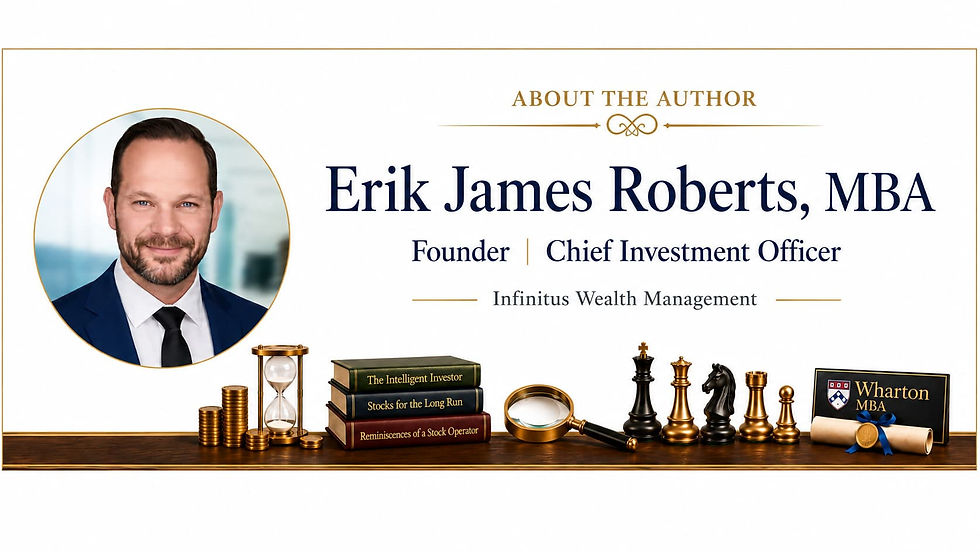
Business owners in Nashville face a very different wealth management challenge than most investors. Their financial lives are often tied to one company, one industry, one local market, and one major source of income. That concentration can create wealth, but it can also create risk. The same business that builds a family’s net worth can also make personal finances more complex, less liquid, and more exposed to economic cycles.
For many entrepreneurs, founders, and closely held business owners, wealth is not sitting neatly inside a traditional investment account. It may be tied up in business equity, retained earnings, commercial real estate, equipment, receivables, future sale value, or distributions that vary from year to year. A strong wealth management strategy has to account for that reality.
The best wealth management for business owners in Nashville should not begin with a generic model portfolio. It should begin with the owner’s business, cash flow, tax exposure, liquidity needs, risk concentration, family goals, and long-term plan for converting business success into durable personal wealth.
For some business owners, the goal is still aggressive growth. They want to continue building wealth, reinvest in the company, and invest excess capital for long-term appreciation. For others, the priority is wealth preservation. They may be approaching retirement, succession, or a business sale and want to protect what they have built. Many owners need both: continued growth, but with enough risk control, liquidity, and tax awareness to avoid overexposing the family balance sheet.
That is where disciplined wealth management becomes especially important.

Why Business Owners Need Specialized Wealth Management
A business owner’s financial life is usually more complicated than a traditional W-2 employee’s financial life. Income may be inconsistent. Taxes may fluctuate. Cash needs may change quickly. Business cycles can affect both company profits and the owner’s personal income at the same time.
A strong year may create excess cash that needs to be invested thoughtfully. A slower year may require liquidity. A future expansion may require capital. A potential sale may create a major tax event. A key employee departure, lawsuit, economic downturn, or client loss may affect the business and the owner’s personal financial position simultaneously.
That is why business owners need wealth management that considers more than just stocks and bonds.
Key issues often include:
Business concentration risk
Personal liquidity reserves
Tax-efficient investment decisions
Portfolio diversification outside the business
Retirement and succession planning
Investment strategy before and after a business sale
Risk management around irregular income
Estate and legacy considerations
Managing wealth after a liquidity event
Balancing business reinvestment with personal financial security
For Nashville business owners, this can be especially relevant because many local companies operate in industries with unique risk profiles, including health care, real estate, construction, music and entertainment, hospitality, professional services, and private companies serving a fast-growing regional economy.
A business owner’s investment strategy should reflect the fact that the business itself is already a major investment.
The Business Is Usually the Largest Asset
For many successful business owners, the company is the largest asset on the balance sheet. It may represent years of work, personal sacrifice, financial risk, and future family security. But because the business is often illiquid, difficult to value, and tied to the owner’s active involvement, it should be treated differently from a diversified investment portfolio.
A business owner may have significant net worth on paper but limited liquid assets outside the company. That can create problems if the owner needs cash for taxes, family expenses, investment opportunities, business downturns, or unexpected events.
This is one of the most important reasons to build wealth outside the business.
A well-designed investment portfolio can help create a second source of financial strength. It can provide liquidity, diversification, income, and long-term compounding that is not entirely dependent on the business. The goal is not necessarily to reduce confidence in the company. The goal is to avoid having every part of the owner’s financial life tied to the same asset.
For example, if a business owner has 80% or 90% of net worth tied to a private company, the personal investment portfolio should usually be built with that concentration in mind. Taking excessive risk in the portfolio may not be appropriate if the owner is already taking significant risk through the business. On the other hand, a younger entrepreneur with strong cash flow and a long time horizon may still want a growth-oriented portfolio, provided there is adequate liquidity and risk control.
The right answer depends on the owner’s stage of life, business stability, income needs, and long-term goals.
Building Liquidity Outside the Business
Liquidity is one of the most overlooked parts of wealth management for business owners. Many entrepreneurs are comfortable keeping money inside the company because that is where they feel most in control. But personal liquidity matters.
Business owners should generally consider building liquidity for several reasons:
Unexpected tax bills
Business downturns
Payroll or operating disruptions
Personal emergenciesFamily expenses
Real estate opportunitiesInvestment opportunities
Periods of reduced distributions
Legal or insurance-related issues
Future transition planning
The amount of liquidity needed depends on the business. A stable professional services firm with recurring revenue may require a different liquidity reserve than a construction company, restaurant group, real estate business, or music-related enterprise with more variable income.
A practical approach is to separate liquidity into layers.
The first layer is near-term personal cash. This is money available for family living expenses, tax payments, and short-term needs.
The second layer is business contingency capital. This is money that may be needed if the business faces a disruption, delayed receivables, lower revenue, or unexpected expenses.
The third layer is investable surplus capital. This is capital that can be invested for longer-term growth, income, or preservation because it is not needed for immediate business or personal obligations.
Too often, business owners skip this structure. They either keep too much cash idle or invest too aggressively without a clear liquidity plan. Both can be costly. Holding excessive cash may reduce long-term returns. Investing money that may be needed soon can force withdrawals at the wrong time.
A disciplined wealth management process helps define which dollars should remain liquid and which dollars can be invested.

Diversifying Away From Business Risk
Concentration is often how business owners build wealth. Diversification is how they protect it.
A founder may have spent years betting on one company. That concentration may have been necessary to create wealth. But once wealth exists, the owner should think carefully about how much additional concentration is appropriate.
Diversification for business owners is not just about owning more stocks. It is about understanding the risks that already exist in the business and building a portfolio that does not simply duplicate those risks.
For example:
A real estate business owner may already be heavily exposed to interest rates, property values, financing conditions, and local economic trends.
A health care entrepreneur may already be exposed to reimbursement rules, regulation, labor costs, and health care policy changes.
A construction business owner may already be exposed to housing demand, commercial development, material costs, and economic cycles.
A music or entertainment business owner may already be exposed to contract timing, touring cycles, royalties, licensing, or industry disruption.
A technology founder may already be exposed to venture funding conditions, software spending, innovation cycles, and market sentiment toward growth assets.
The investment portfolio should reflect those realities. A business owner whose company is cyclical may benefit from more stable portfolio components. An owner with highly illiquid private company wealth may need more liquid public-market exposure. An owner with significant real estate exposure may need to be careful about adding too much additional real estate or interest-rate-sensitive exposure.
The objective is not to eliminate risk. The objective is to avoid unnecessary duplication of risk.
Managing Irregular Income and Distributions
Business owners often have irregular income. One year may produce large distributions. Another year may require retaining earnings in the business. This makes portfolio management more complex.
A traditional investor may contribute to a portfolio steadily from every paycheck. A business owner may need a more flexible approach. Contributions may happen quarterly, annually, or after strong cash-flow periods. Withdrawals may also be irregular, especially if the business owner uses the investment portfolio to supplement income during slower periods.
A wealth management strategy for business owners should account for this by creating a clear contribution and withdrawal framework.
During strong years, excess cash can be moved into investment accounts according to a disciplined plan rather than being left idle or invested impulsively. During weaker years, the portfolio should have enough liquidity and risk control to avoid forced selling of volatile assets.
This is especially important for owners nearing retirement or succession. If business distributions become less reliable, the investment portfolio may need to play a larger role in supporting lifestyle expenses.
For some owners, the goal is to build an investment portfolio large enough that they are no longer dependent on business income. That transition can take years and should be planned intentionally.

Tax-Efficient Investing for Business Owners
Taxes are one of the most important parts of wealth management for business owners. Entrepreneurs often face complex tax situations involving business income, pass-through income, capital gains, estimated taxes, depreciation, business sales, real estate, retirement plans, and charitable giving.
Investment management should be coordinated with tax awareness. This does not mean the investment portfolio should be driven only by tax considerations. It means taxes should be considered as part of the decision-making process.
Specific tax-aware investment considerations may include:
Managing capital gains realization
Using tax-loss harvesting when appropriate
Holding tax-efficient investments in taxable accounts
Coordinating taxable, tax-deferred, and tax-exempt accounts
Using municipal bonds where appropriate for higher-income investors
Avoiding unnecessary short-term gains
Planning around large income years
Managing investment income before or after a business sale
Evaluating charitable giving strategies
Coordinating with the owner’s CPA
For business owners in high-income years, after-tax return matters. A portfolio that looks attractive before taxes may be less compelling if it creates unnecessary taxable income or short-term gains. Conversely, a thoughtful tax-aware portfolio can help improve what the owner actually keeps.
This is one reason tax-exempt municipal bonds may play a role for certain business owners, especially those in higher tax brackets who want income, stability, and potential federal tax-exempt interest. The right allocation depends on the owner’s tax situation, income needs, and broader portfolio structure.
Planning Before a Business Sale
A business sale can be one of the most important financial events in an owner’s life. It can also be one of the easiest moments to mishandle.
Many owners spend years preparing the company for sale but far less time preparing their personal wealth strategy. That can create major problems after the transaction closes.
Before a sale, business owners should consider:
How much liquidity they will need after closing
What taxes may be due
Whether sale proceeds will be paid upfront or over time
How much risk they want to take after the sale
How to replace business incomeWhether to create an income portfolio
How to diversify a large cash position
How to avoid investing too much too quickly
How estate planning should change after liquidity
Whether charitable planning should happen before or after the transaction
The investment strategy after a sale may differ dramatically from the strategy before the sale. Before the sale, the owner may still be focused on growth and business reinvestment. After the sale, the priority may shift toward capital preservation, income generation, tax efficiency, and long-term family stewardship.
One of the biggest mistakes after a business sale is rushing to invest the proceeds without a disciplined plan. Another is staying in cash too long because the owner is overwhelmed by the size of the decision. A structured investment plan can help phase capital into the market, align risk with goals, and reduce emotional decision-making.

Turning Business Wealth Into Personal Wealth
Building a successful business is not the same as building permanent personal wealth. Business value can fluctuate. Buyers can disappear. Industry conditions can change. Margins can compress. Key employees can leave. Debt can become more expensive. Personal guarantees can create exposure.
The goal of wealth management is to gradually convert business success into personal financial independence.
That may include:
Building taxable investment accounts outside the company
Creating retirement assets independent of business value
Diversifying into public-market investments
Maintaining appropriate cash reserves
Reducing unnecessary personal guarantees over time
Planning for income after business exit
Coordinating estate and legacy goals
Managing taxes across multiple accounts
Separating personal financial security from business volatility
This does not mean pulling too much money out of the business too early. It means creating balance. A business may continue to be the highest-return opportunity, but the owner should still avoid having the entire family financial future dependent on one private company.
Portfolio Design for Business Owners
Portfolio design for business owners should begin with a few practical questions.
How much of the owner’s net worth is tied to the business?
How stable is the business income?
How much liquidity does the owner need?
Is the business cyclical or defensive?
Is the owner still growing aggressively or preparing for transition?
Does the owner need portfolio income?
What is the owner’s tax bracket?
How much volatility can the owner tolerate?
What happens if the business has a difficult year at the same time the market declines?
These questions matter because business owners are often exposed to multiple risks at once. If business income falls during an economic slowdown, the investment portfolio may also be under pressure. That is why portfolio construction should consider downside risk, liquidity, and the correlation between the business and the market.
A strong portfolio may include a combination of growth assets, stable equities, fixed income, tax-exempt bonds, international exposure, dividend growth investments, and cash reserves. The mix depends on the owner’s goals.
For a younger owner still building wealth, the portfolio may emphasize long-term growth.
For an owner preparing for a sale, the portfolio may gradually become more balanced.
For an owner who has already sold a business, the portfolio may focus more heavily on capital preservation, income, and tax efficiency.
For an owner who wants both growth and stability, a blended approach may be most appropriate.
Growth, Preservation, or a Combination of Both
Business owners are not all in the same stage. That is why wealth management should not use a one-size-fits-all model.
A business owner still focused on expansion may want a portfolio designed for long-term capital appreciation. This may include growth equities, large-cap companies, technology exposure, small- and mid-cap companies, and global opportunities. The goal is to build wealth outside the business while still accepting reasonable market volatility.
A business owner approaching retirement, succession, or a sale may want more emphasis on preservation. This may include stable equities, dividend growth, high-quality bonds, municipal bonds, and lower-volatility strategies. The goal is not necessarily to avoid growth entirely, but to reduce the risk of large drawdowns at the wrong time.
Many owners need a combination of both. They may want part of the portfolio allocated to long-term growth and another part allocated to stability, liquidity, or income. This type of structure can be especially useful when the owner has multiple goals at once: continuing to compound wealth, preparing for a future exit, supporting family expenses, and reducing dependence on business income.
This is where Infinitus Wealth Management’s investment strategies can be used as tools to pursue specific objectives.
For clients seeking growth, strategies such as the Balanced Growth Equity Strategy, Large-Cap Growth Equity Strategy, Technology-Focused Growth Strategy, Small- & Mid-Cap Growth Equity Strategy, Global Opportunities Equity Strategy, and International Equity Strategy may be considered depending on the client’s goals, risk tolerance, and existing business exposure.
For clients seeking more wealth preservation, risk control, or income, strategies such as the Stable Value Equity Strategy, Risk-Controlled Growth Strategy, Dividend Income Growth Strategy, Tax-Exempt Municipal Bond Strategy, and U.S. & Global Bonds Strategy may be more relevant.
For clients who need a combination of growth and preservation, several strategies may be blended together. For example, a business owner may use growth-oriented equity strategies for long-term appreciation while also using stable value equities, dividend growth, municipal bonds, or global bonds to help manage volatility, income needs, and tax exposure.
The strategy should follow the goal — not the other way around.
Managing Risk Before It Becomes a Problem
Business owners are used to risk. They take it every day. But business risk and portfolio risk should be managed deliberately.
A common mistake is assuming that because an owner is comfortable with business risk, they should automatically take high investment risk. That is not always true. Business owners may already have more risk than they realize.
Specific risks to evaluate include:
Revenue concentration
Customer concentration
Debt exposure
Personal guaranteesIndustry cyclicality
Dependence on key employeesReal estate exposure
Regulatory risk
Market risk
Tax risk
Liquidity risk
Succession risk
A portfolio can help offset some of these risks, but only if it is built intentionally. For example, an owner with high business debt may need more conservative personal liquidity. An owner with highly cyclical revenue may need a portfolio that does not depend too heavily on the same economic cycle. An owner with significant taxable income may benefit from tax-efficient investment choices.
Risk management does not mean avoiding opportunity. It means understanding where risk already exists and deciding how much additional risk is appropriate.

Retirement Planning for Business Owners
Retirement for business owners is often less straightforward than retirement for employees. Many owners do not have a traditional retirement date. Some plan to sell. Some want to transition management to family members. Some want to remain involved part time. Others may expect the business to generate income indefinitely.
A wealth management plan should help answer several questions:
How much of retirement depends on selling the business?
What happens if the sale price is lower than expected?
Can the owner retire without selling?
How much annual income will the investment portfolio need to provide?
Should investment risk decrease as the owner approaches exit?
How should assets be positioned before and after the transition?
If a business owner’s retirement depends entirely on a future sale, that creates risk. Market conditions, buyer interest, interest rates, earnings quality, and industry trends can all affect valuation. A more resilient plan builds personal assets along the way so the owner has options.
The strongest position is flexibility. A business owner who has built significant liquid wealth outside the company can choose whether to sell, hold, transition, or partially exit from a position of strength.
Estate and Legacy Planning Considerations
Business owners often need more sophisticated estate planning than traditional investors. Ownership interests, valuation discounts, family succession, trusts, buy-sell agreements, and liquidity for estate taxes can all become important.
While investment management is not a substitute for legal or tax advice, the investment strategy should be coordinated with the owner’s estate planning goals.
Important considerations may include:
Who will own the business in the future
Whether children are active or inactive in the company
How to equalize inheritance among heirs
Whether life insurance is needed for liquidity
How investment accounts are titled
Whether trusts should own certain assets
How charitable goals fit into the plan
How to manage concentrated wealth after a sale
Business owners often care deeply about legacy. That may include family wealth, charitable giving, employee continuity, community impact, or preserving what they built. The investment portfolio should support those goals by providing liquidity, stability, and long-term capital stewardship.
Coordinating With CPAs and Attorneys
Business owner wealth management should not happen in a vacuum. The best results often come from coordination among the investment adviser, CPA, attorney, and other professional advisers.
The CPA may help evaluate tax impact, entity structure, deductions, estimated taxes, and sale planning. The attorney may assist with estate documents, buy-sell agreements, operating agreements, succession planning, and asset protection. The investment adviser should help manage the liquid wealth strategy, portfolio construction, tax-aware investment decisions, and long-term capital allocation.
For business owners, this coordination can be especially valuable during major events such as:
Business saleRecapitalization
Partner buyoutSuccession plan
Large tax yearRetirement transitionInheritance
Real estate transaction
Major charitable gift
Significant portfolio repositioning
Good coordination helps avoid conflicting decisions. For example, an investment decision may create tax consequences. A legal structure may affect liquidity. A business sale may change portfolio risk. A retirement decision may affect cash flow. The more complex the owner’s financial life becomes, the more important coordination becomes.
What Business Owners Should Look for in a Wealth Manager
Business owners should look for a wealth manager who understands investment management, risk, taxes, liquidity, and the reality of owning a business. The adviser should be able to think beyond generic financial planning and focus on capital allocation, portfolio strategy, and long-term wealth stewardship.
Important qualities include:
Experience with concentrated wealth
A disciplined investment process
Tax-aware portfolio management
Ability to customize portfolios
Understanding of business owner cash flow
Focus on risk management
Clear communication
Fiduciary alignment
Long-term relationship mindset
Ability to coordinate with CPAs and attorneys
Business owners should also look for an adviser who can explain how the portfolio fits the owner’s broader financial life. The adviser should be able to answer why a certain allocation makes sense, how much liquidity is appropriate, what risks are being managed, and how the portfolio may change as the business evolves.
For a Nashville business owner, a local relationship can also matter. Business owners often prefer working with an adviser who understands the Nashville market, the entrepreneurial community, and the types of industries driving local wealth creation.
Why Nashville Business Owners Need a Thoughtful Investment Strategy
Nashville has become a major center for business formation, health care entrepreneurship, real estate development, entertainment, hospitality, and professional services. That growth has created meaningful opportunities for business owners, but it has also made wealth management more important.
A growing business can create significant income and net worth. But without a disciplined strategy, business owners may end up with too much cash, too much company-specific risk, too little liquidity, inefficient taxes, or an investment portfolio that does not match their actual financial life.
A thoughtful investment strategy helps business owners answer the most important question: how do I turn business success into lasting financial independence?
The answer is rarely one strategy. It is usually a combination of liquidity planning, diversification, tax awareness, growth investing, risk control, income planning, and long-term capital preservation.

How Infinitus Wealth Management Helps Business Owners
Infinitus Wealth Management works with business owners by focusing on active, personalized portfolio management and disciplined investment strategy. The goal is to build portfolios that reflect each client’s situation rather than forcing every client into the same model.
For business owners, that means considering the company, the owner’s personal balance sheet, tax exposure, liquidity needs, future exit plans, and long-term wealth objectives.
Some clients may need growth-oriented strategies to continue building wealth outside the business. Others may need preservation-oriented strategies to protect capital after decades of work. Many need a custom combination that balances both goals.
Infinitus Wealth Management’s strategy lineup allows portfolios to be built around different objectives, including growth, income, capital preservation, tax efficiency, global diversification, and risk-controlled equity exposure.
Depending on the client’s needs, portfolios may incorporate strategies such as Balanced Growth Equity, Large-Cap Growth Equity, Technology-Focused Growth, Risk-Controlled Growth, Stable Value Equity, Dividend Income Growth, Tax-Exempt Municipal Bonds, Global Bonds, International Equity, Global Opportunities Equity, Small- & Mid-Cap Growth Equity, and Private Companies Investment Strategy.
The purpose of these strategies is not to create complexity for its own sake. The purpose is to align investment management with the business owner’s real financial goals.
Best Wealth Management for Business Owners in Nashville: A Better Approach
The best wealth management for business owners in Nashville should be practical, customized, and investment-focused. It should recognize that business owners already carry meaningful risk. It should help them build wealth outside the company, manage liquidity, reduce concentration, invest tax-efficiently, prepare for future transitions, and preserve capital when appropriate.
For some owners, the priority is growth. For others, it is preservation. For many, it is a combination of both.
The right wealth management strategy should help answer the questions that matter most:
How much should remain in the business?
How much should be invested personally?
How much liquidity is enough?
How should the portfolio account for business risk?
How can taxes be managed more efficiently?
How should assets be positioned before a sale?
How should wealth be preserved after a liquidity event?
How can the owner build long-term financial independence beyond the company?
Business owners spend years building value. The next step is making sure that value is managed with discipline, clarity, and purpose.

At Infinitus Wealth Management, we offer a complimentary, no-obligation portfolio review for investors who want an independent fiduciary second opinion on how their capital is actually being managed.This is a conversation, not a sales process. If your portfolio is already well constructed, we will say so directly. If we identify avoidable costs, unnecessary concentration, tax inefficiencies, or portfolio structure that may be working against you, we will show you specifically where those issues exist. From there, you decide what to do with the information.

Important Disclosures
Infinitus Wealth Management is a registered investment advisory firm. This article is provided for educational and informational purposes only and does not constitute investment, tax, legal, or accounting advice. It is not an offer or solicitation to buy or sell any security or to enter into any advisory relationship. Any references to specific strategies, withdrawal rates, tax provisions, or historical figures are general in nature and may not be appropriate for any individual investor.
Past performance is not indicative of future results. All investing involves risk, including the possible loss of principal. Tax laws are complex, change frequently, and have unique application to individual circumstances; please consult a qualified tax professional regarding your specific situation. Social Security rules, Medicare rules, and retirement account regulations are subject to legislative and regulatory change.
The information in this article was believed to be accurate at the time of writing but is not guaranteed. Readers should consult with their own qualified advisors before making any financial decisions specific to their situation.


